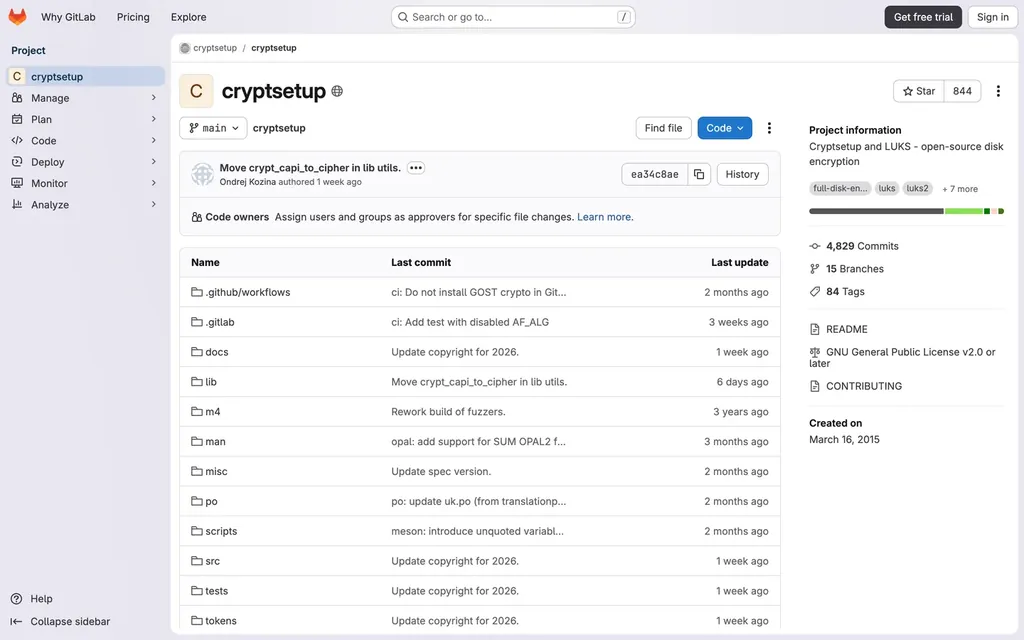
LUKS (Linux Unified Key Setup) is the standard disk-encryption specification for Linux, implemented by the cryptsetup utility. It provides a header format and key-slot system on top of the dm-crypt kernel module, supporting multiple decryption passphrases per volume.

Our take
LUKS is the de-facto disk encryption standard on Linux, shipped in every major distribution and used as the foundation by higher-level tools like Tomb and most graphical installers. The key-slot design lets you add up to eight separate passphrases or key files to a single encrypted volume, which is useful for backup keys and multi-user setups. It is a low-level building block rather than an end-user application, so setup is done at the command line or through a distribution installer. Reach for LUKS directly if you want full control over your Linux partition encryption; use a wrapper like Tomb or your distro’s installer if you want a guided experience.
Listed in
LUKS alternatives

VERNAM A free, fully client-side file encryptor that runs in your browser. Drop in any file, set or generate a passphrase, and it seals the result into its own .vrn format. Nothing is ever uploaded, and it works offline.

VeraCrypt It can create a virtual encrypted disk that works just like a regular disk but within a file. It can also encrypt a partition or the entire storage device with pre-boot…

Cryptomator Cryptomator encrypts your data quickly and easily. Afterwards you upload them protected to a cloud service.

7-Zip File archiver with a high compression ratio and built-in encryption functionality.

GnuPG GnuPG (GNU Privacy Guard) is the free, GPL-licensed implementation of the OpenPGP standard. A command-line tool for Linux, macOS, and Windows, it encrypts and signs files and email, and manages public-key directories.

Gpg4win Gpg4win is the official Windows installer for GnuPG, bundling the Kleopatra certificate manager and GpgOL for Outlook integration. It provides OpenPGP and S/MIME encryption for files and email on Windows.