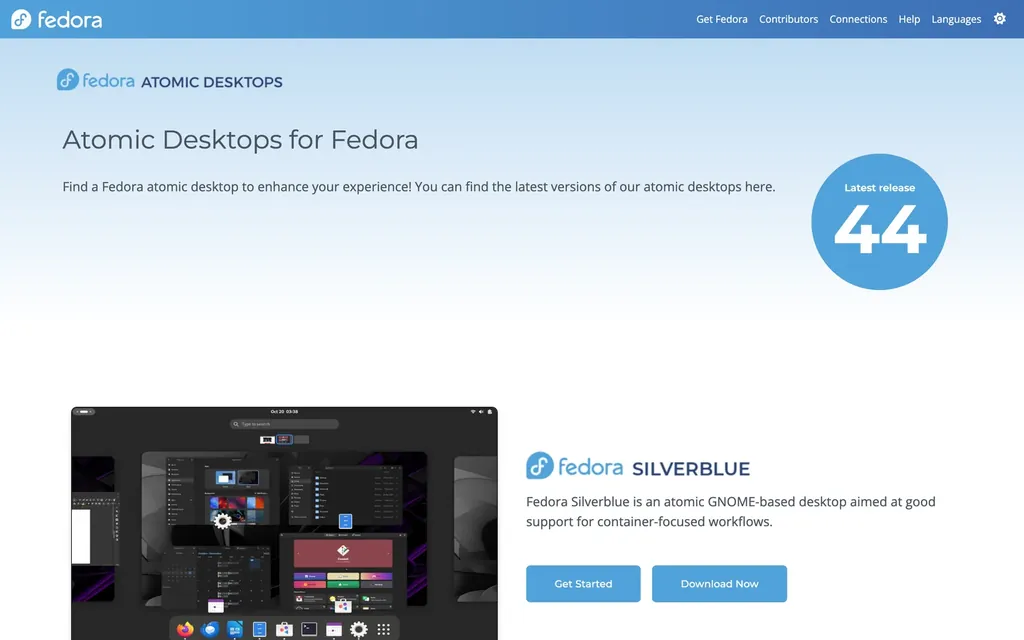
Fedora Atomic Desktops (Silverblue, Kinoite, and others) are immutable Fedora variants where the base OS is read-only and updated atomically via rpm-ostree. Applications run as Flatpaks, and rollback to a prior OS image is built in.

Fedora Atomic Desktops
Official website fedoraproject.org/atomic-desktops
Our take
Immutability changes the threat model in a meaningful way: a compromised package or a bad system update cannot silently alter the base OS, and rolling back is a single command rather than a reinstall. Fedora’s position close to upstream and Red Hat’s engineering backing means SELinux is on by default and the tooling is polished. The honest friction point is the Flatpak-centric workflow - traditional RPM package installs go into layered overlays that complicate the image, so this design suits users willing to embrace Flatpak or containers. A natural upgrade path for anyone on standard Fedora Workstation who wants more resilience without leaving the ecosystem.
Listed in
Fedora Atomic Desktops alternatives

Qubes OS Qubes OS: A reasonably secure operating system

Tails Tails: Portable, encrypted and secure through the Tor network

Whonix A free, open-source desktop operating system that forces all traffic through Tor, run as two isolated virtual machines.

Fedora Workstation Fedora Workstation: User friendly and easy to setup

Ubuntu Ubuntu: User friendly and easy to setup

openSUSE Tumbleweed openSUSE Tumbleweed is a rolling-release Linux distribution that defaults to Btrfs with Snapper snapshots, letting you boot into a previous system state if an update breaks something. Available with KDE, GNOME, or Xfce.